Skip to content
DhumiDhumi
  • Solutions
    • CRM for Small Business
    • Manufacturing Production Tracking Software
    • Manufacturing ERP Software
    • Lead Management Software
    • B2B Web Portal Development
    • Custom CRM Solutions
    • Business Management Software
    • Retail CRM Software
    • AI Agents for Business
    • AI Assistant for Business
    • AI Powered Solutions
    • ERP & CRM Industrial Manufactures
  • Products
    • Dhumi Commerce
    • Dhumi Flow
  • Data For AI
  • About Us
  • Client Success
  • Blog
Contact Us
Contact Us
Dhumi

Dhumi

    • CRM for Small Business
    • Manufacturing Production Tracking Software
    • Manufacturing ERP Software
    • Lead Management Software
    • B2B Web Portal Development
    • Custom CRM Solutions
    • Business Management Software
    • Retail CRM Software
    • AI Agents for Business
    • AI Assistant for Business
    • AI Powered Solutions
    • ERP & CRM Industrial Manufactures
    • Dhumi Commerce
    • Dhumi Flow
  • Data For AI
  • About Us
  • Client Success
  • Blog
Contact Us
Contact Us
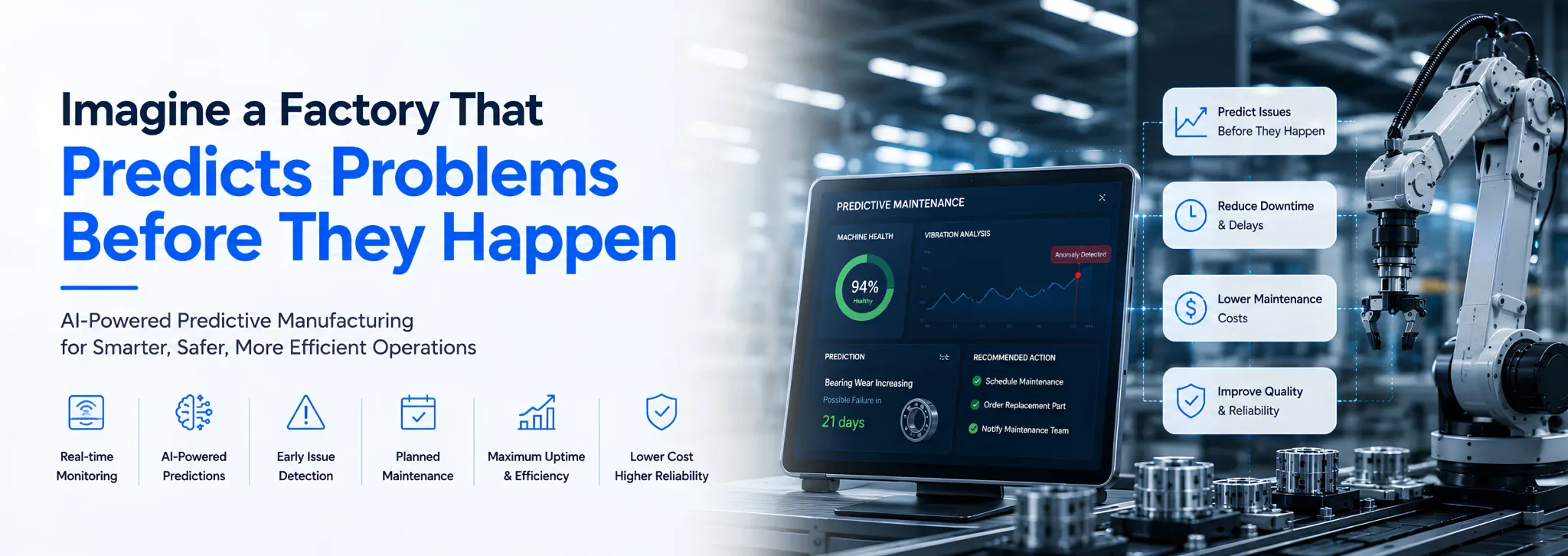
Manufacturing Problems Are Predictable Now, Here's How AI Sees Them Coming It's 2 a.m. on the shop floor. The night shift supervisor, Ramesh, is doing his usual rounds when a machine that stamps metal panels makes a strange grinding noise. Ten minutes later, it stops completely. The line halts. Forty workers stand idle. The morning shipment is now at risk. This happens in factories every single day, all over the world. A bearing wears out, a sensor stops reading correctly, or a supplier sends the wrong batch of material. Suddenly, a well planned production schedule falls apart. For a long time, manufacturers have treated these events as bad luck. But what if a factory could see trouble coming, days or even weeks before it happens? That is not science fiction anymore. It is the idea behind predictive manufacturing, and it is slowly changing how factories work. The Old Way: Fixing Problems After They Break Traditional manufacturing has mostly used two methods: Reactive maintenance – fix it when it breaks. Preventive maintenance – fix it on a fixed schedule, whether it needs fixing or not. Both have clear downsides. Reactive maintenance means sudden downtime, rushed repairs, and missed deadlines. Preventive maintenance is safer, but it wastes money replacing parts that still had life left in them. It also misses failures that happen between scheduled checks. Think of it like going to a doctor only after you collapse, compared to a yearly check up that might still miss a problem that is forming right now. Neither one is perfect. What manufacturers really want is something closer to a health monitor that watches all the time and warns them before something goes wrong. Common Manufacturing Industry Problems Before looking at the fix, it helps to see what actually goes wrong on the factory floor. Most manufacturing problems fall into a few common groups: Problem Area What It Looks Like Typical Impact Equipment breakdown Machine fails without warning during a shift Lost production hours, rushed repairs Quality defects Output is inconsistent, needs rework Wasted material, unhappy customers Supply chain delays Raw material arrives late or wrong Idle lines, missed delivery dates Labor shortages Not enough skilled workers, high turnover Slower output, more training needed Poor demand forecasting Making too much or too little Extra inventory or lost sales Energy and resource waste Machines running inefficiently Higher running costs Each of these used to be handled by a different team on its own. Maintenance fixed machines. Quality checked output. Planners guessed at demand. What is changing now is that all this data is being pulled into one place, and AI is being used to connect it together. Enter the Predictive Factory Picture the same factory as before, six months after it adds sensors to its most important machines. Every motor, pump, and belt is quietly sending data about vibration, temperature, and sound. An AI system watches this data all the time and compares it to patterns from thousands of hours of past machine behavior. Three weeks before Ramesh's midnight breakdown would have happened, the system notices a small change in vibration on that same stamping machine. It is too small for a human ear to catch. But the system has seen this pattern before. It is the early sign of a worn bearing. A repair request is created on its own, a new part is ordered, and the fix is planned for a quiet Sunday when the line is not running. No midnight breakdown. No idle workers. No missed shipment. This is predictive manufacturing in action. It uses sensor data, past records, and machine learning to guess at failures and slowdowns before they disrupt production. Where AI Agents Fit In Predictive models are good at spotting patterns and sending alerts. But someone, or something, still has to act on that alert. This is where AI agents for manufacturing come in. Unlike a simple alert that just says "this machine might fail," an AI agent can take the next steps by itself. It can check spare part stock, plan a repair, book a technician, and even adjust the production plan around that machine. In short, the agent moves the factory from "we were warned" to "it is already handled." Reactive vs. Preventive vs. Predictive: A Quick Comparison Approach When Action Happens Cost Pattern Downtime Risk Reactive maintenance After the failure Low planning cost, high repair cost High Preventive maintenance On a fixed schedule Medium cost, some wasted spend Medium Predictive maintenance (AI driven) Just before the failure, based on data Higher upfront cost, lower ongoing cost Low A Simple Look at the Downtime Curve Imagine plotting a factory's monthly unplanned downtime hours over a year, starting the month AI monitoring goes live: This kind of pattern shows up again and again. Unplanned downtime drops fast in the first two to three months, then keeps falling slowly as the system learns more about the machines it is watching. It works like a fitness tracker that gets more accurate the longer it watches your heart rate. Manufacturing Problems in Linear Programming There is another, older layer to predictive manufacturing worth knowing about: linear programming. Long before AI existed, manufacturers used linear programming to decide how much of each product to make, using limited machines, labor, and materials, in order to earn the most profit or spend the least cost. These are called "manufacturing problems" in operations research. They are solved using limits, such as machine hours or material supply, and a goal, such as maximum profit. Today, AI planning tools often combine this older math with predictive data. So the decision of how much to produce is based not just on fixed limits, but also on real time guesses about machine availability and possible material delays. What This Means for the Factory Floor None of this replaces the people who run the plant. Maintenance workers, quality checkers, and planners are still needed, and arguably more important now, because their time goes into judgment calls and hard repairs instead of routine checks and guesswork. AI handles the repeated watching. People handle the decisions that need real experience. For manufacturers still deciding whether to invest in predictive systems, the safest starting point is usually small. Pick one bottleneck machine or line, add sensors, collect a few months of data, and let a model start learning before scaling up across the whole plant. Trying to do everything at once often fails. Small, focused trials build the trust needed for wider use later. Back to Ramesh. In the new version of this story, his 2 a.m. round is uneventful. The machines hum along, the alerts stay quiet, and the only surprise is how normal an ordinary night has become in a well monitored factory. Conclusion Manufacturing problems like breakdowns, defects, delays, and poor forecasting have always been part of running a factory. What has changed is how early these problems can now be spotted. With sensors, data, and AI working together, a factory can move from reacting to trouble to expecting it, and often preventing it before it ever slows down the line. This does not remove the need for skilled workers. It simply gives them better warning and more time to act, which is what makes a factory truly reliable. Resources: The Data and Effects of Manufacturing Problems Unplanned downtime in discrete manufacturing plants now costs roughly $260,000 per hour on average, and can be even higher in continuous process industries like oil, gas, or food processing. Across the manufacturing industry, downtime is estimated to cost businesses around $50 billion every year worldwide. Each hour of unplanned downtime now costs about 50 percent more than it did a few years ago, due to inflation and more complex supply chains. Plants that fully use AI based predictive maintenance report a 30 to 50 percent drop in total machine downtime, along with a 20 to 40 percent longer working life for their equipment. Facilities with strong sensor coverage on their machines see around 25 percent better accuracy in predicting failures compared to plants with limited sensors. The predictive maintenance market itself is expected to grow from about $11 billion in 2024 to over $70 billion by 2032, showing how fast manufacturers are adopting this approach. Smart factories are also expected to face a shortage of about 425,000 skilled workers, which is one reason AI is being used to handle routine monitoring while people focus on harder problems. Most manufacturers who deploy predictive maintenance see a positive return on their investment within 12 to 18 months. Problems of manufacturing industries, in short: equipment breakdowns, quality defects, supply chain delays, labor shortages, poor demand forecasting, and resource waste are the common issues that slow down production and raise costs. Manufacturing problems in linear programming, in short: these are planning problems where a factory decides how much of each product to make, given limited machines, labor, and materials, to earn the most profit or spend the least cost.
Design Research
01.09.2026
8 min

Imagine a Factory That Predicts Manufacturing Problems Before They Happen

Read more
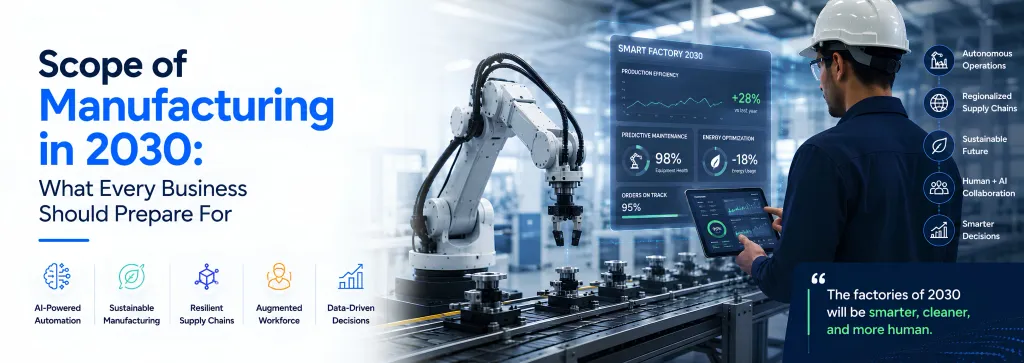
Scope Of Manufacturing in 2030
Design Research
01.09.2026
8 min

Scope Of Manufacturing in 2030: What Every Business Should Prepare For

Read more
OpenAI: Transforming Enterprise and Personal Growth - Best Guide in 2026
Design Research
01.09.2026
3 min

OpenAI: Transforming Enterprise and Personal Growth – Best Guide in 2026

Read more
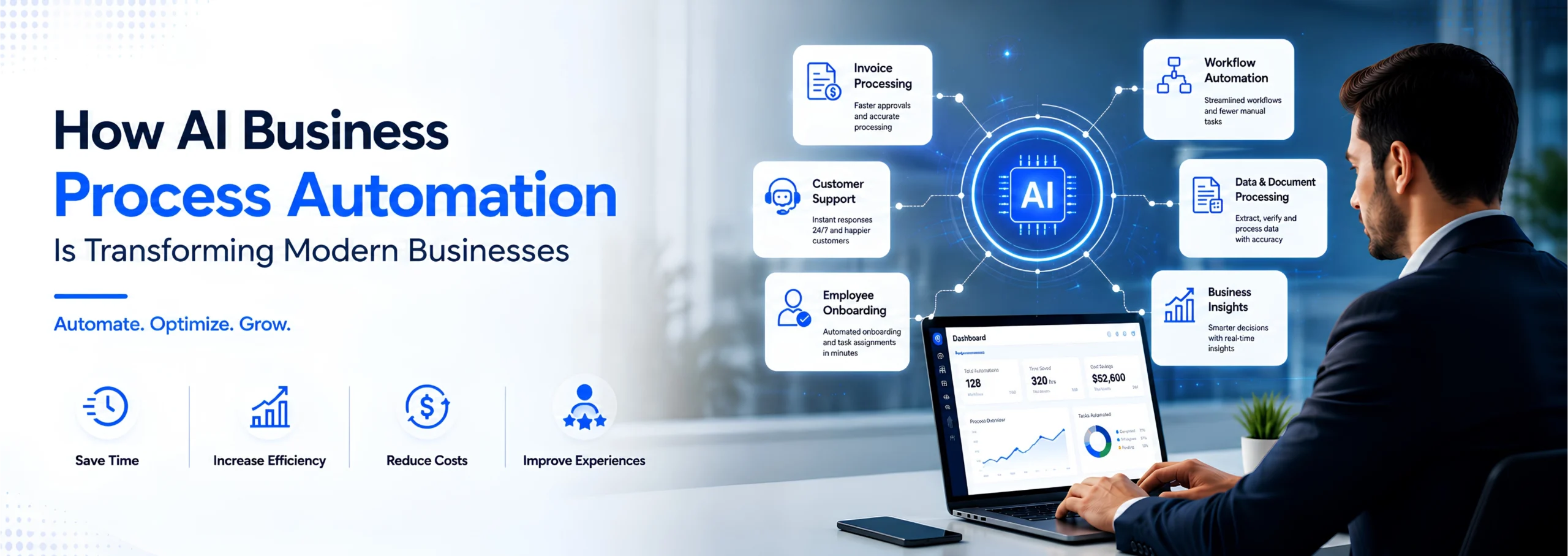
How AI Business Process Automation Is Transforming Modern Businesses
Design Research
01.09.2026
10 min

How AI Business Process Automation Is Transforming Modern Businesses: A Story Every Business Owner Can Relate To

Read more
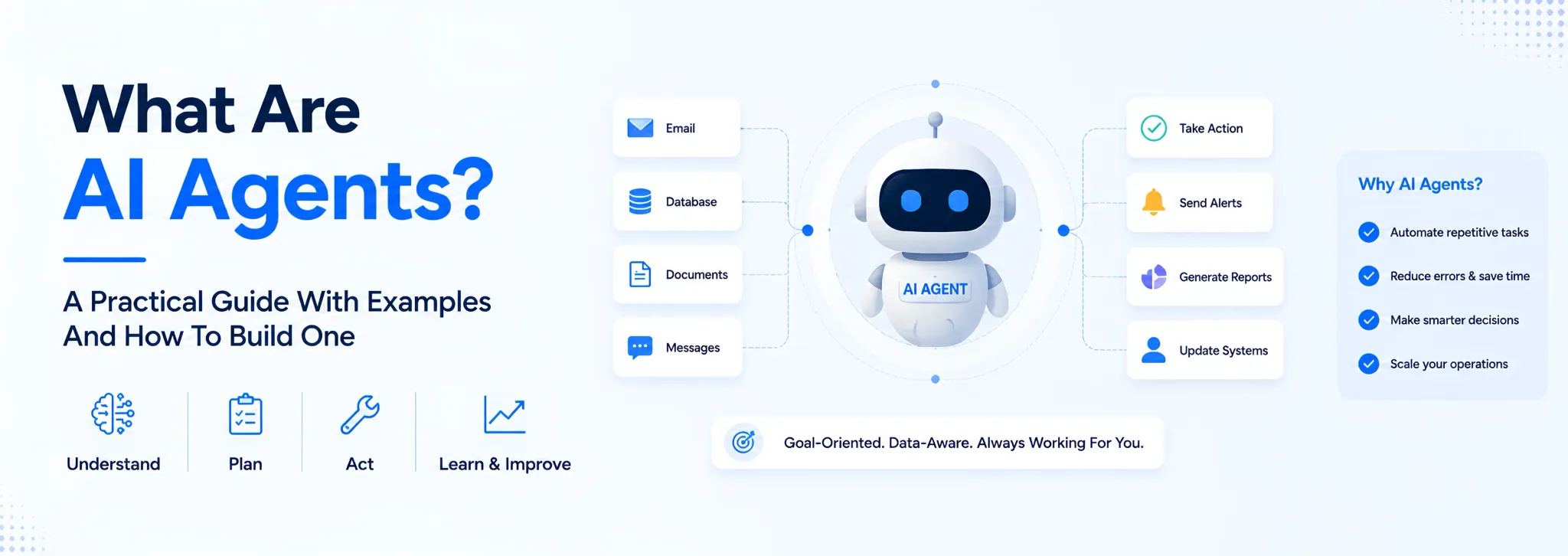
What Are AI Agents
Design Research
01.09.2026
10 min

What Are AI Agents? A Practical Guide With Examples And How To Build One

Read more
3D digital brain inside a glowing sphere representing Voice RAG technology, illustrating voice-driven data intelligence with neural waveforms and AI icons.
Design Research
19.11.2025
3 min

Voice RAG: The Future of Voice-Driven Data Intelligence

Read more
Colorful cloud-shaped AI interface visualizing data insights, charts, and analytics for voice and chat-based data exploration.
Design Research
19.11.2025
3 min

Chat With Data: The Smarter Way to Explore Information Using AI 

Read more
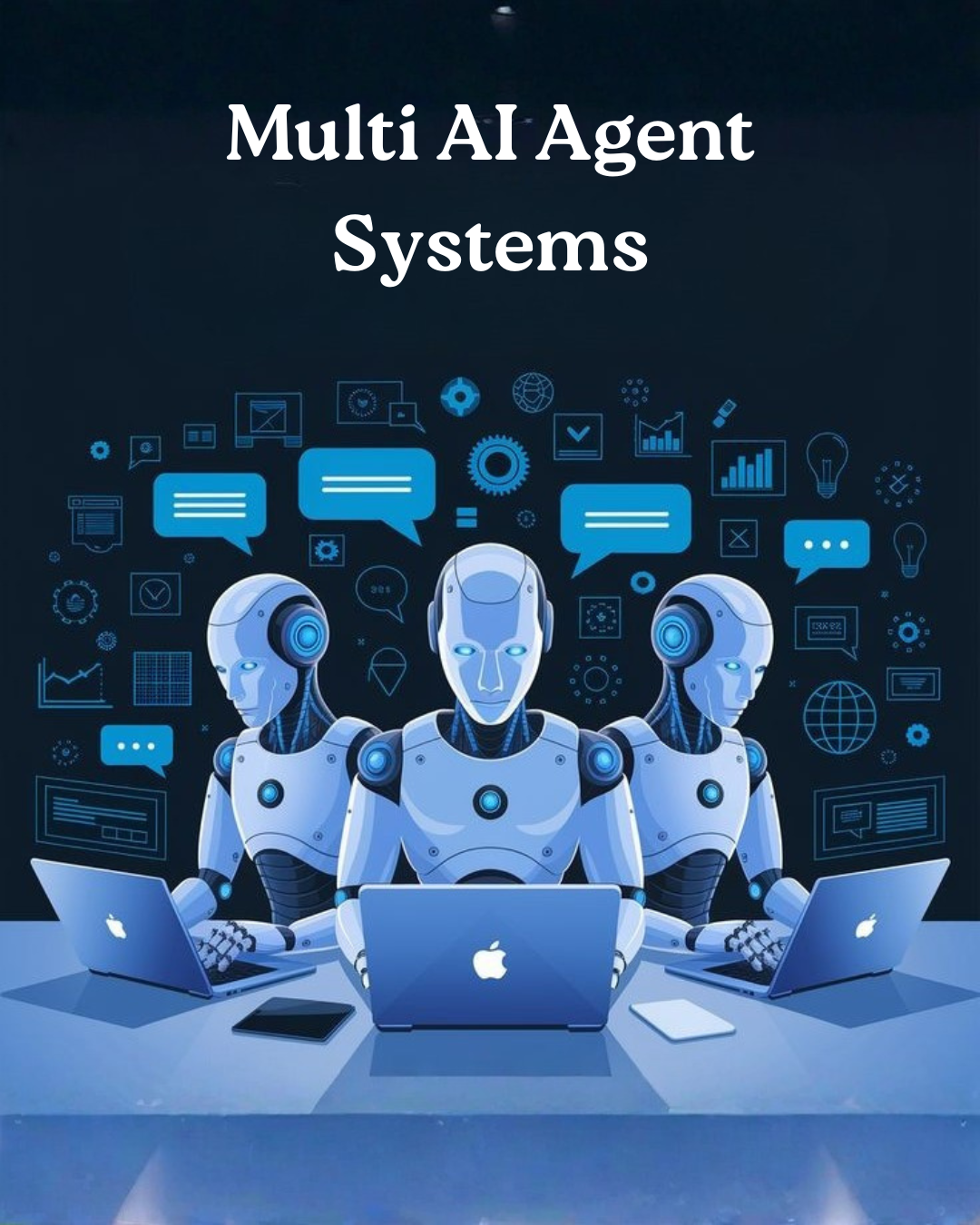
illustration of multi AI agent systems working collaboratively on laptops, representing autonomous AI agents performing tasks and communication in a coordinated workflow.
Design Research
18.11.2025
5 min

Multi AI Agent Systems: The Future of Intelligent Planning, Task Allocation &Continuous Learning

Read more
AI conversation mining visual with digital brain, analytics dashboards, and business insights for 2025.
Design Research
17.11.2025
3 min

Conversation Mining: The AI Advantage Every Business Needs in 2025

Read more
AI-powered finance assistant automating reconciliation and generating real-time financial insights for business reporting.
Design Research
17.11.2025
5 min

How a Finance Assistant Powered by AI Is Transforming Modern Financial Operations

Read more
  • 1
  • …
  • 4
  • 5
  • 6
  • 7
  • 8
  • …
  • 10

Recent Post

  • How Small Manufacturing Businesses Can Compete with Large Enterprises
  • Maximize Success in the Hybrid Workplace: Strategies for Thriving
  • Agentic AI in Manufacturing: The Future of Autonomous Industrial Operations
  • Top 10 Benefits of Using AI in Website Development
  • Benefits of Low Code: How Businesses Are Building the Future Faster

Recent Comments

  1. web page on Best 10 Interactive Meetings Ideas to Boost Engagement in 2025November 13, 2025

    Hi there I am so glad I found your blog page, I really found you by error, while I was…

  2. vorbelutrioperbir on AI Agents for Indian Manufacturers: 11 Game-Changing Benefits for Industry GrowthOctober 31, 2025

    I discovered your blog site on google and check a few of your early posts. Continue to keep up the…

  3. 789betvi on Rethinking AI: It’s Not AI vs. Humans, It’s AI with HumansSeptember 20, 2025

    It's fascinating how platforms like 789bet99 are adapting to local preferences – streamlining account creation & payments is key for…

  4. 789betvi on Why “Vibe Coding” Sucks: The Hidden Dangers of AI-Generated CodeSeptember 20, 2025

    Dice games are surprisingly strategic! Seeing platforms like 789betvi focus on easy account setup & local payments is smart –…

  5. 789betvi on Why “Vibe Coding” Sucks: The Hidden Dangers of AI-Generated CodeSeptember 20, 2025

    Scratch cards are such a fun, quick thrill! Seeing platforms like 789wim adapt to local preferences with easy banking (like…

Archives

  • September 2026
  • November 2025
  • September 2025
  • August 2025
  • May 2025
  • April 2025
  • March 2025
  • February 2025
  • January 2025
  • December 2024
  • November 2024
  • October 2024

Categories

  • AI
  • AI Tools
  • Business
  • Cybersecurity
  • E-Commerce
  • Healthcare
  • Low Code
  • Manufacturing
  • Uncategorized
  • Website Development
  • Workflow Automation
  • Workspace collaboration

Join our newsletter

Dhumi AI-powered: Low code Collaboration for Custom Business Solutions

    By subscribing you agree to with our Privacy Policy

    Dhumi Logo New 2

    Address:

    91 Springboard, Bannerghatta Rd, Dollars Colony, Phase 4, J. P. Nagar, Bengaluru, Karnataka 560078

    Contact:

    +91 97407 36150
    +1 925 272 7604

    info@dhumi.com
    admin@dhumi.com

    Company

    • Our Solutions
    • About Us
    • Contact Us

    Legal Policies

    • Refund Policy
    • Security
    • Terms and Conditions
    • Privacy Policy

    DHUMI

    © Copyright Dhumi Technologies India Pvt Ltd. All Rights Reserved.